Mon - Fri: 8:00 - 4:00

Open Hours

NIS DG

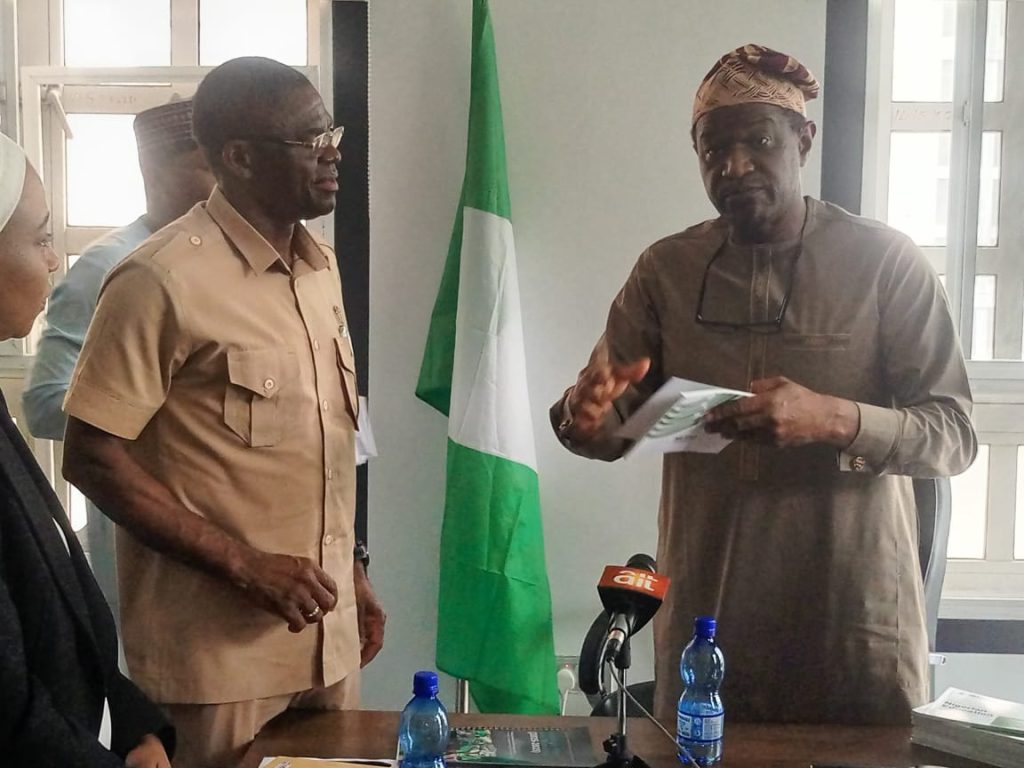
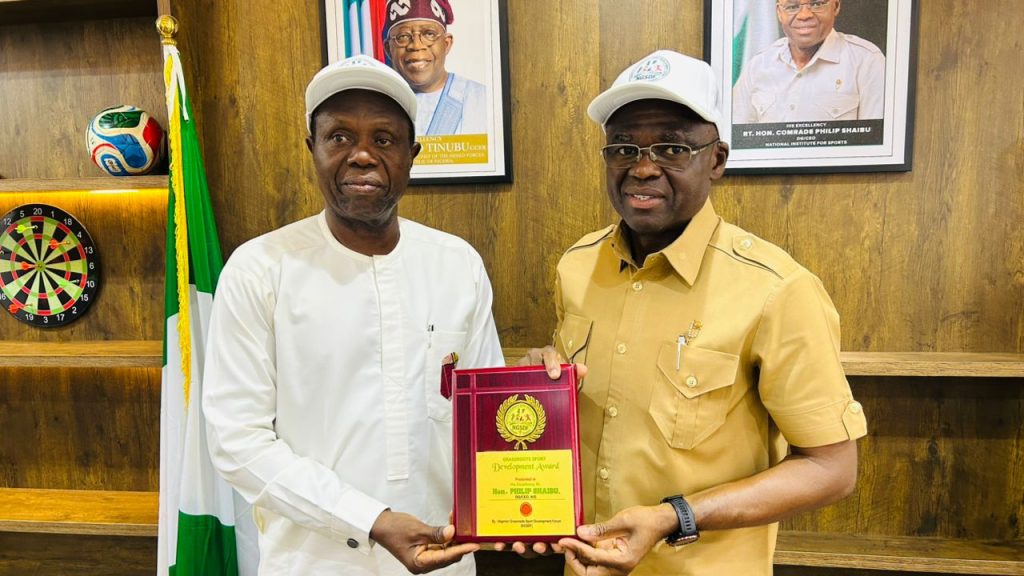
At the NIS Athletes Development Centre in Abuja, the Director General/CEO of the National Institute for Sports, Rt. Hon. Comdr. Philip Shaibu, received the President of the Nigeria Grassroot Sports Forum, FCT, Godwin Bamigboye, during a courtesy visit .

Shaibu Hosts NGSF President, Calls for Urgent Overhaul of Nigeria’s Sports System…We need Grassroot Football Federation…..Bamigboye

The Director General and Chief Executive Officer of the National Institute for Sports (NIS), H.E. Comrade Philip Shaibu, has called for a sweeping reform of Nigeria’s sports system, stressing the need to return to grassroots development and enforce discipline across all levels. Shaibu made this known while receiving the President of the Nigeria Grassroot Sports Forum, FCT , Godwin Bamigboye, during a courtesy visit to the NIS Athletes Development Centre in Abuja. Recounting his personal experience, Shaibu revealed that his football career began in the Federal Capital Territory, where he played under the Youth Football . He noted that, in the past, youth competitions at the U-15, U-16, and U-17 levels provided Nigerian players with early exposure to international tournaments, an approach he said should be revived. “Youth Football was once strong pillars of grassroots football development. Young players were discovered early and nurtured through structured competitions. That system gave many of us the foundation to grow professionally,” he said. The NIS boss expressed concern over what he described as the decline of sports in Nigeria, alleging that individuals who contributed to the deterioration of the system are still occupying key positions. “Sports went down completely in Nigeria, and many of those responsible are still within the system. We must address that if we are serious about rebuilding,” Shaibu stated. He emphasized that sports development should be driven by passion, discipline, and proper planning rather than financial incentives alone. Reflecting on his playing days, Shaibu said athletes of his generation were motivated by passion and commitment. Highlighting his tenure as Deputy Governor of Edo State, Shaibu pointed to the transformation of Bendel Insurance Football Club as a model of effective sports management. According to him, the team recorded an unbeaten run in the Nigerian league due to strategic planning, discipline, and prompt payment of allowances. “We ensured proper organization, enforced discipline among players and management, and made funding available. Match bonuses were paid ahead of games, and that translated into results,” he explained. Shaibu also stressed the importance of long-term athlete development, noting that Edo State invested in grooming athletes for four years ahead of hosting the National Sports Festival, a strategy that yielded multiple medals. Looking ahead to international competitions, he raised concerns about Nigeria’s lack of preparation for the 2028 Olympics, calling on the National Sports Commission to establish a clear roadmap. “We cannot continue to scout players abroad while neglecting grassroots development at home. That is not how to build a sustainable sports system,” he said, adding that consistent data tracking and performance evaluation of athletes are critical to success. On the performance of the national team, Shaibu lamented Nigeria’s failure to qualify for the World Cup, urging stakeholders to focus on accountability and forward planning rather than blame-shifting. “It is not about apologies. We must ask hard questions and begin preparations early. Responsibility lies with those managing the system,” he noted. He reaffirmed NIS’s commitment to grassroots sports development, stating that the institute has expanded its operations to all six geopolitical zones to strengthen talent discovery and capacity building. “We are ready to partner with organizations like yours to drive grassroots sports development across the country,” Shaibu added. Earlier in his remarks, Godwin Bamigboye identified the lack of grassroots focus as a major challenge facing Nigerian sports, noting that the system has been operating from the top down rather than building from the base. “It is troubling that some professional players emerge without any traceable development history from school coaches to grassroots trainers. These are gaps we must close,” he said. Bamigboye commended President Bola Ahmed Tinubu for appointing Shaibu as DG of NIS and for creating the position of Senior Special Assistant on Grassroots Sports, describing both moves as deliberate efforts to address existing gaps in the sector. He emphasized the critical role of trainers in talent development, stressing that without skilled personnel to identify and nurture athletes, progress would remain limited. “We must train the trainers. Once we build capacity at that level, the impact will be felt across the grassroots,” he said. Bamigboye further praised Shaibu’s leadership at NIS, particularly the expansion of its programs to the six geopolitical zones, which he described as a strategic step toward deepening grassroots sports development nationwide. He expressed the forum readiness to collaborate with NIS, revealing that the federation has developed a comprehensive blueprint aimed at revitalizing grassroots sports in Nigeria.

Shaibu Hosts NGSF President, Calls for Urgent Overhaul of Nigeria’s Sports System…We need Grassroot Football Federation…..Bamigboye Read More »

Shaibu Advocates Stronger Inter-Agency Collaboration as NIS Produces Nigeria’s First Certified Marathon Medical Director

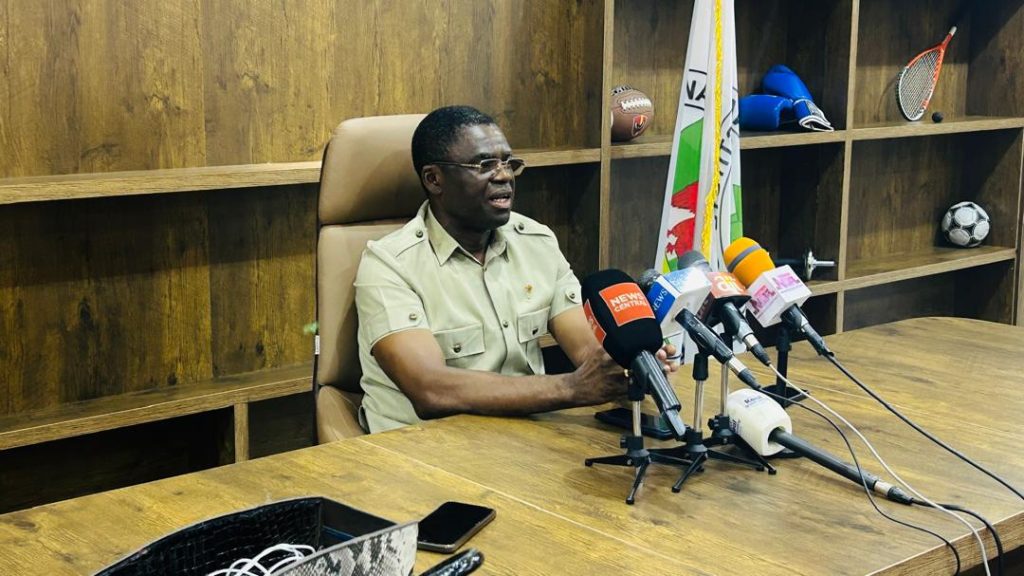
The Director General and Chief Executive Officer of the National Institute for Sports (NIS), H.E. Comrade Philip Shaibu, has renewed calls for stronger collaboration among government agencies in the sports sector, stressing that synergy remains critical to unlocking Nigeria’s full potential in sports development. Shaibu made this known during a media interactive session along with the Institute’s Medical Director, Dr. Sam Ogbondeminu, who has recently made history as Nigeria’s first certified marathon race medical director after completing a rigorous international certification process in Spain. Speaking at the interactive session, the DG emphasized that inter-governmental collaboration is not just desirable but necessary, citing practical examples of how partnerships can drive results. He particularly appreciated the Federal Ministry of Foreign Affairs, and Lady Bianca Ojukwu, for their intervention in facilitating visa arrangements that enabled participation in the certification programme in Spain. According to him, “This is why collaboration among government institutions is essential. Without that support, this milestone may not have been possible.” The NIS Boss, however, expressed concern over the lack of institutional support from key agencies within the sports ecosystem. He noted that the NIS has largely relied on internal efforts and private partnerships to sustain its programmes, despite its central role in sports development. He explained that while the National Sports Commission (NSC), the Nigeria Football Federation (NFF), and the NIS are the three major sports parastatals in the country, their functions must be better aligned for optimal performance. While the NFF focuses on football and the NSC oversees general sports administration, the NIS, he said, remains the nation’s specialized institution responsible for the training and certification of athletes across various disciplines. “The NIS is not just an academic institution; it is both academic and professional. We train, certify, and build capacity for athletes and sports personnel. That role must be fully recognized and integrated into national sports planning,” he stated. The DG disclosed that since assuming office, efforts to convene formal engagements with the NSC and NFF have yet to fully materialize, despite repeated attempts. He, however, expressed optimism, noting a recent breakthrough in collaboration with the NFF, particularly in aligning NIS programmes with CAF B coaching certification standards. “Our technical teams are already working. We want to see NIS certification align with CAF B standards, so that our graduates remain competitive globally,” he added. Shaibu also highlighted progress made with the Nigerian Education Loan Fund (NELFUND), revealing that arrangements are underway to support financially challenged students of the Institute through the student loan scheme, ensuring they complete their training. He reiterated that all government agencies operate within a unified system and must function as one, regardless of administrative bottlenecks. “I understand the system, but I will continue to push until collaboration works. We have all been entrusted with responsibilities under the Renewed Hope Agenda of President Bola Ahmed Tinubu, and we must deliver.” The DG noted the strategic importance of sports in national development, noting that the President’s vision to use sports as a vehicle for unity, youth engagement, and economic diversification can only be achieved through coordinated efforts. He stressed that engaging young people productively through sports would significantly reduce idleness and insecurity. Highlighting the significance of Dr. Sam’s achievement, Shaibu described it as a major milestone for Nigeria’s sports medicine landscape. He lamented that in the past, the country had to rely on foreign expertise for such roles, but expressed confidence that this new development marks the beginning of self-sufficiency. “I am a team player, and my goal is simple, to ensure that the system works. When it fails, we must take responsibility, not shift it. At the NIS, we have started the work, and very soon, we will begin to see even greater results,” he said. In his remarks, Dr. Sam Ogbondeminu recounted the journey to his certification, revealing that the opportunity began when the DG encouraged him to apply as medical director for the Okpekpe International Road Race. He explained that meeting the requirements necessitated undergoing a three-stage certification programme in Madrid. According to him, the process was demanding and, at a point, nearly derailed due to logistical challenges. However, support from the Okpekpe race organizers and the intervention of the Ministry of Foreign Affairs ensured that he was able to complete the programme successfully. With this achievement, Nigeria now boasts a certified marathon medical director, a development expected to strengthen the country’s capacity to host and manage international road races with improved medical standards. The meeting underscored a broader message, Nigeria’s sports sector stands at a turning point, where collaboration, innovation, and commitment will determine how far and how fast the nation can go.

Shaibu Advocates Stronger Inter-Agency Collaboration as NIS Produces Nigeria’s First Certified Marathon Medical Director Read More »

Shaibu’s Humility on Display as He Serves at the Altar in Abuja

Shaibu’s Humility on Display as He Serves at the Altar in Abuja What a powerful demonstration of humility and faith by the Director General and Chief Executive Officer of the National Institute for Sports (NIS), His Excellency Comrade Philip Shaibu, Sunday served as a thurifer during Mass at Saint Agnes Catholic Church, Wuye, Abuja, in commemoration of this year’s Father’s Day. Dressed in simple liturgical vestments and carrying the thurible, swinging gently as incense rose in reverence, Shaibu blended seamlessly into the solemnity of the service, taking on a role traditionally reserved for devoted parish servers. The scene, captured during the procession and moments of prayer at the altar, reflected a striking contrast between public office and personal devotion. Faithfuls watched with admiration as the former Edo State Deputy Governor participated fully in the sacred rites, moving with calm focus and reverence. At a time when public figures are often defined by the weight of their titles, Shaibu’s decision to serve at the altar as usual conveyed a different message, one rooted in humility, discipline, and spiritual commitment. The significance of his role as thurifer was not lost on observers. The act of offering incense, symbolizing prayers rising to God, with a deeper expression of service beyond the public sphere. For those at the Mass, it was a call that leadership is not only about authority but also about submission to higher values and service to humanity. The Father’s Day celebration at the parish centered on the virtues of sacrifice, guidance, and responsibility, qualities closely associated with fatherhood. Shaibu’s participation, therefore, resonated strongly within that context, portraying a leader who not only speaks about values but lives them. Though he maintained a low profile throughout the service, his presence spoke volumes. It reflected a man grounded in faith, unafraid to embrace simplicity despite the stature of his office. Lorem ipsum dolor sit amet, consectetur adipiscing elit. Ut elit tellus, luctus nec ullamcorper mattis, pulvinar dapibus leo.

Shaibu’s Humility on Display as He Serves at the Altar in Abuja Read More »

The Director-General and Chief Executive Officer of the National Institute for Sports (NIS), H.E, Comrade Philip Shaibu and the President of the Nigeria Football Federation (NFF), Ibrahim Gusau

NIS DG Leads Management Team on Condolence, Strategic Visit to NFF President, Gusau

The Director-General and Chief Executive Officer of the National Institute for Sports (NIS), H.E, Comrade Philip Shaibu, alongside the management team, paid a condolence and courtesy visit to the President of the Nigeria Football Federation (NFF), Ibrahim Gusau, at his office in Abuja. Speaking during the visit, Shaibu said the delegation was in the NFF Secretariat for two key reasons first, to commiserate with the federation over the passing of its former leader, Alhaji Ibrahim Galadimma, and secondly, to strengthen institutional collaboration between the NIS and the NFF. “On behalf of the NIS, we are here to condole with you on the loss of a great sports figure, Alhaji Ibrahim Galadimma. His passing is not only a loss to the NFF but to the entire sports community,” Shaibu stated. He described the late Galadimma as a man whose influence extended beyond football administration into community service, noting that he was widely respected for his contributions to society and his commitment to uplifting the vulnerable. “He will be greatly missed. He touched many lives and brought joy to countless people. His impact in sports and at the grassroots level remains significant,” he added. Shaibu also used the opportunity to formally engage the NFF leadership on the need for deeper collaboration between both institutions, noting that although discussions had been ongoing, official engagement had been limited due to tight schedules on both sides. Highlighting recent developments at the institute, the NIS DG revealed that the institute recently matriculated 232 students across various sports disciplines, with 117 specializing in coaching and a significant percentage focusing on football. “The level of interest in football is a clear indication that Nigeria remains a strong football nation. However, we have identified a critical gap in the coaching system, particularly at the grassroots level,” he said. He pointed to the growing number of uncertified “street coaches,” popularly referred to as “Coachila and Coachitos,” especially in urban centers like Lagos, stressing the urgent need to formalize and standardize coaching education in Nigeria. “To address this, we have developed a nationwide programme across the six geopolitical zones to identify, train, and certify these coaches. This effort cannot succeed without collaboration, particularly with the NFF, whose General Secretary is an alumnus of NIS and a FIFA/CAF-certified instructor,” Shaibu noted. He further proposed that NIS certification should become a foundational requirement for coaching progression in Nigeria, including eligibility for international certifications such as CAF and FIFA coaching licences. “For any coach to advance in Nigeria or participate in global certification programmes, there should be a baseline requirement of NIS certification. Charity, they say, begins at home,” he emphasized. Shaibu acknowledged past challenges faced by the institute but stated that under his leadership, significant reforms have been introduced, including a revised curriculum, improved administrative systems, and a renewed focus on global best practices modeled after leading international sports institutes. He also disclosed that the NIS has been decentralized into the six geopolitical zones, with staff deployed and operational structures already in place, supported by state governments providing office spaces and accommodation. According to him, the institute is working towards expanding its presence to all 36 states by 2028 as part of its long-term development plan, with a strong emphasis on grassroots sports development. Responding, NFF President Ibrahim Gusau appreciated the visit and acknowledged the contributions of the late Galadimma, noting his deep-rooted history in Nigerian football, including his tenure as a former chairman of the football association. “Alhaji Galadimma was not just a football administrator but a pillar in the sports community. His legacy will continue to inspire many,” Gusau said. On collaboration, Gusau welcomed the initiative by the NIS DG, noting that partnership remains the most effective pathway to sustainable growth in Nigerian sports. “I am glad you explored partnerships across other sectors before coming to the NFF. It shows sincerity of purpose. We have always been aligned, even without formal meetings,” he stated. He further assured that the NFF is open to working closely with the NIS, particularly in the area of coaching education, adding that both institutions can leverage each other’s facilities to achieve shared goals. “The only way we can succeed is through collaboration. This is the right time to strengthen that relationship. Together, we can build a solid structure for training and developing coaches in Nigeria,” Gusau affirmed. The visit marks a significant step toward renewed synergy between the NIS and NFF, with both bodies expressing commitment to repositioning sports development in Nigeria through structured training and strategic partnerships. Signed:Ben Ogbemudia,S. A. Media,Office of the Director General and Chief Executive Officer, National Institute for Sports.

NIS DG Leads Management Team on Condolence, Strategic Visit to NFF President, Gusau Read More »

Scroll to Top