Our Vision
A world-class tertiary institution for sports.
Training professional coaches, managers and other personnel dedicated to high performance through evidence-based teaching and research.
About
Established 1972 by Decree 31 of the Federal Government of Nigeria — training coaches, sports scientists, paramedics and administrators for Nigeria and the wider African continent.
What drives us
The guiding principles behind every programme, partnership and podium finish associated with the National Institute for Sports.
A world-class tertiary institution for sports.
Training professional coaches, managers and other personnel dedicated to high performance through evidence-based teaching and research.
The driving force for sports in Nigeria.
Producing first-class coaches, high-calibre sports administrators and top-class athletes — contributing substantially to Nigeria's podium success at national and international competitions.
The standards we hold ourselves to.
To produce technically competent coaches, administrators and sports scientists for Nigeria and the wider African continent.
To act as the federal centre of excellence for sports research, athlete testing and continuing professional development.
To support federations, schools and clubs through short courses, certification programmes and access to specialist facilities.
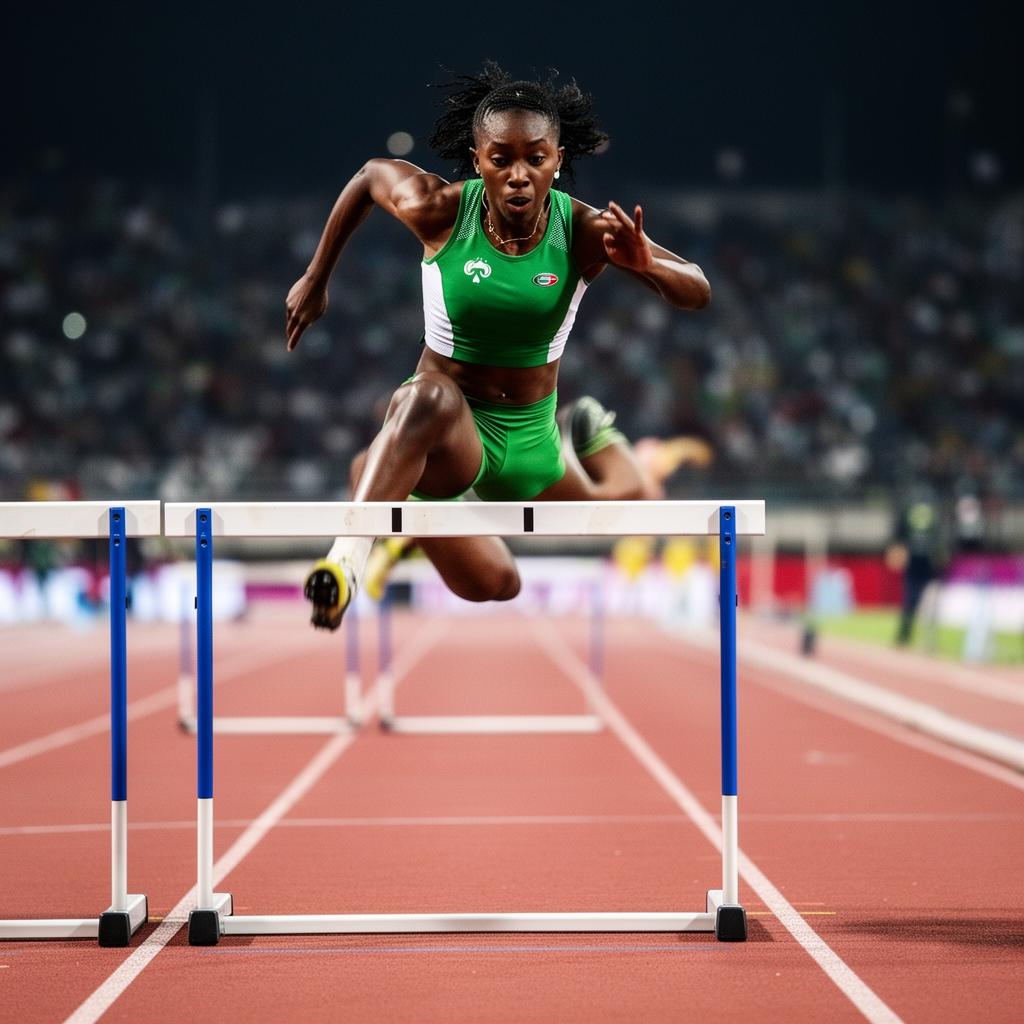 CoachingAthleticsParamedicsSports ScienceAdministration
Nigeria's federal centre of excellence for sport — producing the technicians, scientists and administrators who run the game at every level, from grassroots clubs to the Olympic stage.
The need for the formalised training of coaches was felt after Nigeria's exposure to the Olympic Games of 1952, but it was much later that a serious effort was made at harmonising the various sporadic coaching clinics across the country.
In November 1972, the Executive Committee of the National Sports Commission (NSC) officially endorsed the establishment of an Institute for the training of coaches, sports organisers and other sports functionaries. A Technical Sub-committee was set up to study the training programmes of Eastern European countries, and an agreement was reached with the Government of Germany on technical co-operation. Top Physical and Health Education professionals from Nigerian universities, alongside national and state coaches, were invited to Lagos to draw up a coaching programme for the country. The exercise was later concluded at the University of Ife (now Obafemi Awolowo University), marking the beginning of pilot courses organised under the auspices of the National Institute for Sports (NIS) at three centres — the Universities of Ife and Ibadan, and the Ogbe Stadium, Benin.
Early in 1976, two German experts — Mr. Hoerst Beyer and Professor H. Dubberke — were dispatched to Nigeria. Together with Mr. Heinz Marotzke, already in country, and Dr. Awoture Eleyae, then Principal of NIS, they reviewed the Institute's curriculum while construction on the NIS building had already begun. By May 1, 1975, the Executive Committee of the NSC had promoted Dr. Eleyae to Deputy Director of Sports and Principal of the National Institute for Sports. The team experimented with eight sports across three centres — the University of Ibadan (Tennis and Wrestling), Ogbe Stadium Benin (Swimming) and the University of Ife (Athletics, Football, Gymnastics, Boxing, Volleyball and Weightlifting), involving 280 participants.
In 1987, the Minister for Sports, Air Vice Marshall Bayo Lawal (Rtd), set up a panel to look into the NIS challenges and make suggestions for improvement. Its 1988 report expanded the curricula to a uniform period of nine months for all courses and changed the headship of the Institute from Principal to Director.
In 2002, the 1988 report was reviewed to meet accreditation requirements. The Expert Assessors' recommendations, adopted by Council, restructured the courses to durations ranging from 12 to 24 months for Diploma and Higher Diploma programmes, depending on entry qualifications.
The Institute's bilateral relationship with the Australian government (2001–2002) brought about the establishment of the Athlete Development Programme. NIS was subsequently organised into two arms — the Education / Research Centre in Lagos (the headquarters), and the Athlete Development Centre in Abuja, established to discover, harness and nurture young talented athletes into high-performing elite athletes.
As specified in Decree 31 of 1992 — now an Act of the Federal Republic.
In July 1992, autonomy was granted to the Institute under Decree No. 31. The first Governing Council was inaugurated in August 1993, chaired by Chief Ebun A. Faturoti. Between 2001 and 2015, the Institute witnessed five Governing Councils, headed by Chief Segun Odegbami (MON), Chief Valentine Ozigboh, Major General Lawrence Onoja (Rtd), and Col. I. I. Enonche (Rtd), Mni — who was appointed twice as Council Chairman. The seventh Council, headed by Alhaji Ibrahim Galadima, was inaugurated on Thursday, 29 March 2018.
The Institute currently exists as a parastatal of the Federal Ministry of Sports Development.
Half a century of impact on Nigerian and African sport.
Over the years, the Institute has produced more than 10,000 coaches and sports managers / administrators who have proven their worth around the world. An estimated 98% of Nigerian coaches are products of NIS, found at national, state, local-government and club levels — and across the ECOWAS sub-region and the wider African continent.
Notable products of NIS include Nigeria's first Olympic Gold medallist, Police Supr. Chioma Ajunwa; Coach Abari Ga'anda of the 2000 Sydney Olympics 4×400m silver-medal squad; Coach Eucheria Uche, who led the Senior Female Football team to the 2010 African Nations Cup in South Africa; Coach Osita Egwim of the Taekwondo Olympic silver medallist in China; former Super Eagles Coach Ahmadu Shuaibu; Coach Musa Abdullahi (FIFA U-20 silver-winning team); Coach Fanny Amun (1993 FIFA U-17 Champions); Coach Ladan Bosso (2007 FIFA U-20 silver-winning team); Commonwealth Special Sports gold medallist Sunday Emoghavwe (MON); and the late Theophilus Yemi Tella (MFR), who led the Golden Eaglets to the FIFA U-17 World Cup title in Korea in 2007. NIS sports-management graduates are found across every sporting organisation in Nigeria.
Every unit head reports directly to the Director General / CEO. Tap a unit to see its divisions and sub-units.
The Institute consists of the Sports Education and Research Centre in Lagos — dedicated to producing the manpower required for the effective functioning of sport as an institution — and the Athlete Development Centre in Abuja, conceptualised in 2002 and commissioned in April 2007 for talent identification, development and the seamless flow of athletes into national teams.
Programmes & courses offered
The Governing Council directs general policy formulation and is responsible to the Honourable Minister of Sports Development. The Director General, who oversees day-to-day administration, reports to the Governing Council.
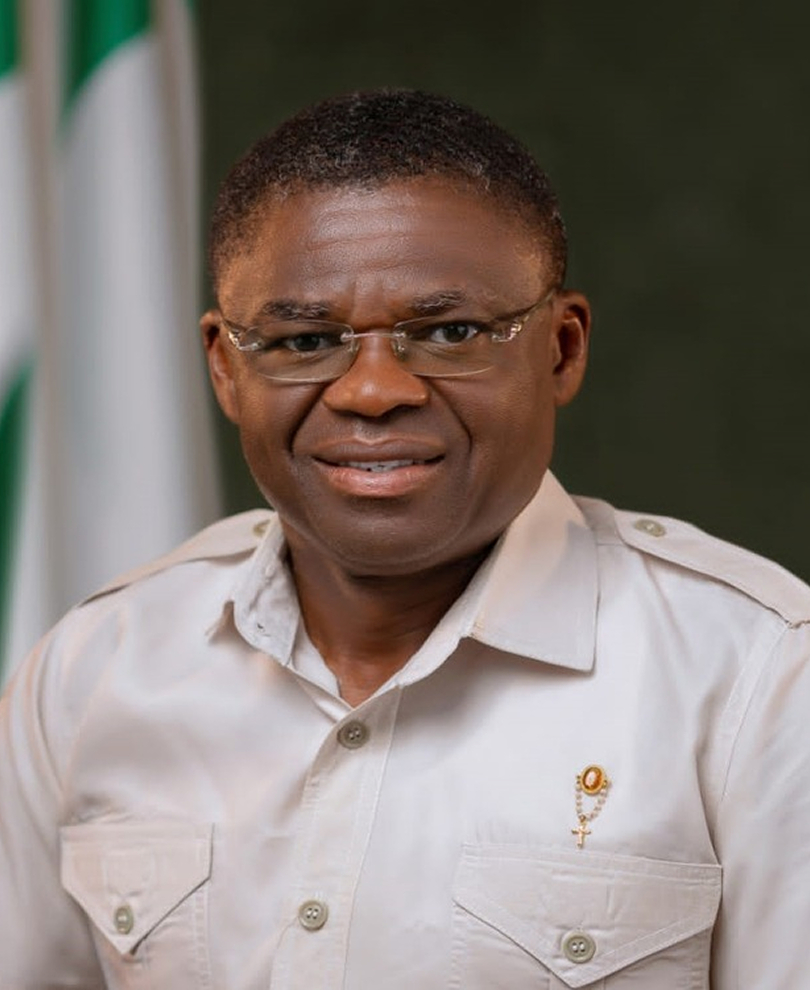
Director General / CEO
Rt. Hon. Comdr. Philip Shaibu
From the Director General
A bold and transformative journey has officially begun at the National Institute for Sports (NIS).
Under the decisive leadership of our Director-General/CEO, the reform and rebranding of the Institute is no longer a vision for tomorrow — it is actively underway. With a clear commitment to aligning the NIS with President Asiwaju Bola Ahmed Tinubu’s Renewed Hope Agenda, the Institute has moved from planning to implementation, marking the start of a new era for Nigerian sports.
As a significant milestone in this ongoing transformation, the Director-General inaugurated the 32-member NIS Advisory Committee — a distinguished body of professionals tasked with guiding and strengthening the Institute’s repositioning. The Committee has since submitted its comprehensive report, laying a solid foundation for reform.
Building on these recommendations, a comprehensive Ten-Year Strategic Plan has already been developed and formally adopted. Implementation has commenced across key priority areas, including institutional restructuring, enhanced sports education and certification programs, athlete development pathways, infrastructure upgrades, and governance reforms.
This is not just a promise of change — it is structured, strategic progress in action.
The National Institute for Sports is being repositioned to restore excellence, rebuild capacity, and reclaim Nigeria’s pride on the global sporting stage.
The journey has begun.
Rt. Hon. Comdr. Philip Shaibu— Director General / CEO
Our team
A council of seasoned administrators, coaches and sport scientists steers the National Institute for Sports — combining decades of public-service experience with a fresh mandate to develop Nigeria's next generation of champions.
Newsroom
Announcements, admissions updates and stories from across the National Stadium Complex.

Announcement · 29 October 2026

Events · 12 September 2026
Director General of the National Institute for Sports (NIS), Rt. Hon. Comdr. Philip Shaibu, discusses the critical role of NIS in training world-class coaches and administrators while advocating for comprehensive structural reforms across Nigerian sports governance.

Announcement · 12 June 2026
The National Institute for Sports has begun a major decentralisation initiative with the launch of its North Central Zonal Office in Plateau State, a move aimed at strengthening sports development, talent identification, and athlete training across Nigeria in line with the Renewed Hope Agenda.
Visit
A federal institution under the Federal Ministry of Sports Development, located at the heart of the National Stadium Complex in Lagos.